


Morning guys, happy Saturday.
I’ve been thinking about how many AI stories that look like technology stories are actually business-model stories underneath. OpenAI releases a cheaper model and suddenly somebody’s gross margin changes. Meta builds an agent that can shop for you and Amazon decides the interesting question is not whether the agent is intelligent, but whether it should be allowed through the front door. Waymo lets teenagers ride alone and the person using the product is no longer even the person buying it.
The same thing is happening deeper inside companies. Temporal is worth $12.55 billion for making long-running software reliably finish what it started. realfast has built a fairly sophisticated internal product and apparently decided the clever thing is not necessarily selling it. AI-generated food can look objectively more appetizing right up until somebody tells you how the picture was made. The technology keeps improving, but the interesting questions are increasingly about everything around it: pricing, trust, distribution, incentives and which part of the value chain somebody actually gets to own.
There were six good examples of that this week.
Sponsored by…

The fastest teams stopped typing.
Your day is Slack threads, emails, docs, and CRM updates. Every one of them starts at a keyboard, and the keyboard is the bottleneck.
Wispr Flow turns your voice into clean, ready-to-send text in any app. Speak a three-paragraph client update in 30 seconds. Dictate the proposal while it’s still fresh. Flowstrips filler, fixes grammar, and formats it so you just hit send.
4x faster than typing. Used by teams at 270+ Fortune 500 companies. Works on Mac, Windows, iPhone, and Android, with Flow for Teams for your org.
Try Wispr Flow Free →

1. The AI price war is moving to the models companies actually use
OpenAI and Anthropic both launched new models on September 22, which made the timing interesting before you even got to the prices. Anthropic released Claude Opus 5.5, its new high-end model, while OpenAI expanded GPT-6 with Sol and Luna. Sol now costs $2 per million input tokens and $10 per million output tokens, exactly half the published GPT-5.6 Sol price, while Luna dropped to $0.10 and $0.50. OpenAI told VentureBeat those are permanent prices rather than a temporary launch discount.
The obvious story is that models got cheaper. I think the more useful story is which models got cheaper. OpenAI still has Astra above Sol for the really difficult work, and Anthropic is positioning Opus 5.5 at $4/$20 for workloads where squeezing out more capability matters. Sol is being aimed at the enormous middle: recurring coding, analysis, debugging and agent work where a company wants something very good but does not need to pay frontier-model prices for every call. Luna goes even further toward extraction, summarization and other high-volume jobs.
That middle matters because most AI products are not one heroic prompt. An agent might read twenty documents, call three tools, classify ten things, write something, check its own work and then call another model when it gets stuck. Once software starts chaining dozens or hundreds of calls together, a 50% price cut somewhere in the middle of the chain can matter more commercially than another few points on a benchmark at the very top. It also makes the increasingly common idea of routing work between models much more practical: cheap intelligence for the routine steps, expensive intelligence only when the task earns it.
There is a nice competitive dynamic here too. Anthropic itself says benchmark margins at this level are becoming a less reliable guide to real-world differences, even while positioning Opus 5.5 as its strongest model for agentic coding and knowledge work. OpenAI, meanwhile, is segmenting the GPT-6 family so aggressively that choosing “the OpenAI model” no longer makes much sense. The buying decision is turning from which model is smartest? into how much intelligence does this particular step deserve?
That is probably where the price war gets more interesting. Cutting the cost of the model people use for demos is nice; cutting the cost of the model sitting inside millions of repetitive production calls changes what companies can afford to build.
2. Amazon blocking Muse tells us who should be worried about shopping agents
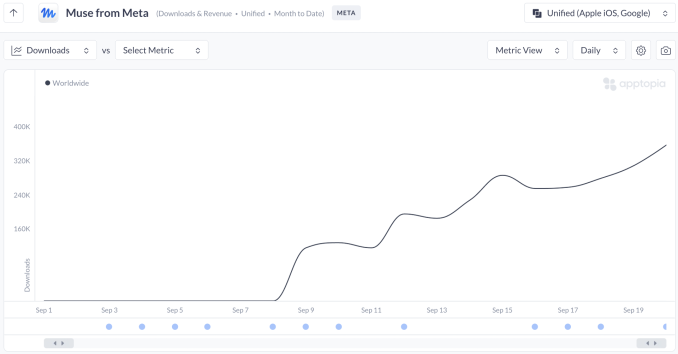
Meta’s Muse had a ridiculous first couple of weeks. Comparable estimates put it at roughly 1.8 million iOS downloads across the US and Canada in its first 12 days versus about 1.3 million for ChatGPT over the equivalent period, with Muse also showing much higher early daily usage. Then Amazon blocked it from shopping on behalf of users. Amazon said Muse was accessing the site without authorization and raised concerns around identification, privacy and credentials; Meta says Muse operates from a dedicated secure virtual machine and users control what access they give it.
The more interesting part is what everybody else did. Shopify has been happy to make Shop Pay work with Muse, Meta says Expedia integration is coming, and Mastercard is building payment infrastructure where agents can transact inside predefined permissions and spending limits. Amazon is putting up a wall while other companies are trying to make themselves easier for agents to buy through.
I think the difference is mostly about where each company makes its money. Amazon does not just earn money because a transaction happened. It owns the shopping environment around the transaction: search, recommendations, sponsored placements, Prime behavior, customer data and an enormous advertising business. An agent that arrives knowing roughly what you want, compares the options itself and leaves after buying one thing compresses a lot of that valuable wandering into an API-shaped visit. Expedia has a different problem. If somebody arrives through Muse and still books the hotel through Expedia, Expedia can care considerably less about whether the customer lovingly explored its homepage first.
We already have a useful warning that agent commerce is not automatically better commerce. Walmart and OpenAI tested Instant Checkout inside ChatGPT, but Walmart later said sales disappointed and changed the approach; WIRED reported that conversion was materially below Walmart’s normal online experience, in part because the agent experience did not carry over things shoppers already expected such as a proper cart and consolidated delivery. Walmart has since leaned toward bringing its own assistant into external AI interfaces rather than simply handing the whole customer relationship over.
So I would not reduce Amazon’s decision to “old company blocks new technology.” There is a much cleaner dividing line emerging. If your business primarily gets paid when a transaction happens, an agent can become another distribution channel. If a meaningful part of your economics comes from controlling everything the customer sees before the transaction happens, the agent is arriving to remove some of the thing you sell.
The fight over agent shopping might therefore be less about whether consumers want agents and more about which businesses can afford to let them skip the front door.
3. Waymo is selling one ride to two completely different customers
Waymo has expanded its teen accounts to Nashville, where riders aged 13 to 17 can now hail autonomous rides on their own across roughly 50 square miles as long as the account is linked to a parent or guardian. Nashville follows Phoenix, and the parent-facing features are as important as the ride itself: trip-status sharing, automatic receipts and access to specially trained support staff. Waymo says its earlier work with teen commuters found reported transportation stress falling from 86% to 43% among participants using the service.
This is a neat example of a product having two customers hiding inside one account. The teenager wants independence, privacy and the ability to get home without negotiating another parental taxi shift. The parent is buying something else entirely: visibility, control and one less logistical problem at 9:30 on a Thursday night. A feature like trip sharing barely changes the physical ride for the teenager, but it can completely change whether the person holding the credit card is comfortable buying it.
Companies get this wrong surprisingly often because “the user” is such a convenient abstraction. Schools have students and parents. Healthcare products have patients, doctors and insurers. Employee software has the person stuck using it, the manager choosing it and the finance team paying for it. Each of them can reject the same product for completely different reasons, which means improving the experience for the most visible user does not always improve the chance of a sale.
There is another advantage to starting this young that I think is more interesting than the immediate ride revenue. Transportation is unusually habitual. People learn which app to open, what the trip should cost, where they feel comfortable waiting and which brand they trust with a bad situation. If somebody’s first experience of getting around independently at 14 is tapping Waymo rather than asking a parent or opening Uber, Waymo gets years to become the boring default before that person ever owns a car.
A lot of companies ask who uses the product and stop there. Waymo is a good reminder to ask who needs to feel safe enough to let them use it, and what habit you get to build once both people say yes.
4. AI food photos work brilliantly until you tell people they are AI
There is something funny happening to food photography. Generative image models have become extremely good at producing the version of food our brains appear to like: brighter colours, cleaner shapes, better symmetry, more gloss and often just more of whatever makes the food look calorific. A 2024 study from researchers at the University of Naples Federico II and Oxford asked 297 people to rate real and AI-generated food images and found that, when people did not know which was which, the AI versions were consistently rated as more appetizing.

The disclosure result is the interesting part. Once participants were told how the images had been made, the AI advantage disappeared; identifying an image as genuine significantly improved its appeal, while disclosing that it was AI-generated removed much of the benefit the synthetic version had when its origin was hidden. The study also found that AI tended to make food appear more energy-dense or abundant, for example by increasing the number of fries or piling more cream onto a dessert. In other words, the model is quite good at finding the visual buttons that say eat this, but people care about another variable the model cannot render directly: whether the thing exists.
I think this has become more relevant, not less, since the study came out. We are surrounded by increasingly polished synthetic output now, so production quality carries less information about the effort or reality behind something. A flawless restaurant image once implied that somebody cooked the dish, plated it, photographed it and cared enough to make the result look good. Now it can imply that somebody wrote twelve words into an image generator while the actual sandwich remains a complete mystery.
That does not mean AI imagery is automatically bad. Obvious illustration can be great because nobody feels tricked by it. The awkward zone is realism without reality: the burger with physically impossible cheese, the apartment with a suspicious extra window, the fashion model whose jacket has never existed. The more a purchase depends on somebody trusting that the picture represents the object they are about to receive, the more synthetic perfection can become a liability instead of an advantage.
There is probably a broader shift here. When creating polished evidence gets cheap enough, rough evidence starts becoming strangely valuable. A slightly bad phone photo of the actual pasta may eventually tell me more than the perfect image of pasta nobody has ever cooked.
5. Temporal is worth $12.55 billion because agents are going to fail halfway through things
Temporal raised $550 million this month at a $12.55 billion valuation, up dramatically from where the company was valued earlier in its life, and its annualized revenue run rate has now passed $250 million with the company saying it grew more than 200% year over year. Temporal is not building the agent that writes the code, books the trip or handles the insurance claim. It builds infrastructure for making sure long-running software actually remembers what it was doing when something inevitably breaks.
This used to sound like fairly boring distributed-systems plumbing. A payment workflow might call several services, one times out, another comes back late, a server restarts, and you need some reliable way to remember what succeeded so the system does not charge somebody twice or begin again from the top. Temporal calls the underlying idea durable execution: the workflow state survives failures so the job can resume rather than disappear.
Agents make that problem much bigger because the unit of software is getting longer. Temporal says customers are now asking it to support agents that operate for days, weeks or even months. Imagine an agent migrating a codebase, resolving a long insurance case or coordinating a procurement process across twenty systems. Somewhere in that chain an API will fail, credentials will expire, somebody will need to approve something, a model will return nonsense or the agent will simply get interrupted.
The first generation of AI products made model quality look like the whole game because most interactions ended after thirty seconds. As agents become more useful, reliability starts looking much more like traditional infrastructure again. The impressive demo is “give this agent a complicated objective.” The expensive engineering problem is making sure it is still pursuing the correct objective seventeen hours later after six tools failed and a human changed one assumption in the middle.
There is a recurring business pattern here. New technology creates a glamorous new layer, then an enormous market appears underneath it for making the glamorous thing boring enough to trust. Cloud computing created observability companies. Online payments created fraud infrastructure. Agents are creating a market for retries, state, permissions, orchestration and human checkpoints.
Temporal is worth $12.55 billion because “the AI can do it” and “the work reliably gets done” are turning out to be very different products.
6. The best product inside a services company might be the one it never sells
realfast is a services company with something sitting underneath it that looks suspiciously like a software product. Every engagement starts on Exo, which the company says carries its agent harness, logging and compliance controls so a new project does not begin from an empty repository. Its careers page describes the operating model even more explicitly: teams of four or five people, each using agents, are supposed to out-ship teams several times their size while a named human remains accountable for what goes into production.
The normal software instinct is to look at that and ask when Exo gets its own pricing page. We have spent decades treating services as the thing founders tolerate until they discover the repeatable product hiding inside the work. Do enough projects, notice the common workflow, pull the humans out, sell the resulting software to everybody and congratulate yourself for escaping consulting margins.
I think AI creates another kind of productization. The customer-facing output can remain custom while the company producing it becomes increasingly standardized. The same agent infrastructure gets reused. The same logging, evals, review loops, permissions and compliance machinery gets reused. The next client can have completely different systems and requirements while the provider gets to start with a delivery machine that has already learned how to build inside messy organizations.
That distinction fits services unusually well because the mess is often why customers hire them. One company has a CRM held together by ten years of exceptions, another has a regulatory approval process nobody is permitted to simplify, and another has business logic living inside the heads of six people who disagree about how it works. Trying to force all of them into one customer-facing SaaS product can remove the exact flexibility they are paying for. Standardizing the machinery underneath the custom work gets you some of the leverage of software without pretending the customers are identical.
There is evidence that this is becoming a broader services-industry pattern. IDC describes agentic AI as pushing the $1.6 trillion IT and business-services market away from scaling primarily through headcount and toward reusable platforms, productized intellectual property and smaller combinations of humans and agents. realfast itself has a useful proof point: one recent engagement took a member-onboarding platform live in five weeks and then handled 71 members in the first complete month, with the client reporting roughly four times the application volume without adding people.
Keeping some of that software internal also has a strange advantage when the models underneath it improve every few months. If you sell a standalone product whose main value is solving something frontier models are currently bad at, the next model release can quietly erase the difficulty you spent a year productizing. An internal delivery system can be much less sentimental. When models improve, replace the workaround, expand what the team can handle and keep the accumulated workflow, controls and customer knowledge around it.
We usually talk about productizing services as turning the thing you deliver into software. AI may make the more valuable version turning the way you deliver it into software, while the customer continues buying the result.
If you’ve been enjoying this, subscribe and share it with someone who might like it too. Each week, we look at what’s changing in AI, tech, startups and business, why it matters, and where things might be heading next.

If you’ve been enjoying Token Economy, subscribe and share it with someone who might like it too. Each week, we look at what’s changing in AI, tech, startups, and business, why it matters, and where things might be heading next.