

Hello hello!
Most companies spend an extraordinary amount of time thinking about what they sell and surprisingly little time thinking about the system around it. When do you ask someone to pay? What exactly is the team optimizing for? Who is allowed to modify the product? How does a customer justify paying you again next month? And once acquiring customers becomes predictable, should you even be using equity to pay for them?
These questions can look secondary because none of them are the product itself. But mature markets are often won in the layer surrounding the product. Two companies can sell roughly the same thing and produce very different businesses because one has better distribution, incentives, financing or timing. This week offered five unusually good examples.
1. ReelShort discovered that the paywall has a location
Short-form drama is becoming a real business. Media Partners Asia estimates that microdramas outside China will generate about $3.6 billion this year. ReelShort alone is projected to reach roughly $1.05 billion in 2026, up from $97 million in 2023 and $785 million last year. It is also expected to become meaningfully profitable for the first time.
The obvious comparison is Quibi, because both businesses tried to put professionally produced short episodes on phones. But saying ReelShort succeeded because Quibi was early or because people now have shorter attention spans misses a more interesting difference. ReelShort does not ask you to make the important economic decision before it has made you care.
The first episodes are cheap or free. The plot moves absurdly fast. Then someone discovers the billionaire is secretly her husband, the DNA results arrive, or the wedding gets interrupted, and the next episode sits behind a payment. The content is not merely entertainment. It is a machine for manufacturing intent immediately before the transaction.
Most software does nearly the opposite. A visitor lands on a homepage knowing almost nothing about the product and is immediately shown three pricing tiers. We ask for money at the moment when the customer has the least evidence that the product is useful. Then, after the user has imported their data, invited the team, generated the report or reached the useful result, we often stop selling because we assume the sale has already happened.
ReelShort suggests a broader rule: willingness to pay is not a stable property of a customer. It changes during the experience. The same person can value the same next episode at zero dollars when the story starts and several dollars ninety seconds later. The product changed their state.
This is why good monetization design is partly about finding moments of maximum accumulated value. Dropbox asking you to upgrade when storage fills is stronger than asking during signup. A research tool can let you discover the result before charging to export it. An accounting product can show the tax estimate before asking you to pay to file. The best paywall is often not the wall with the best copy. It is the wall placed where turning around feels least rational.
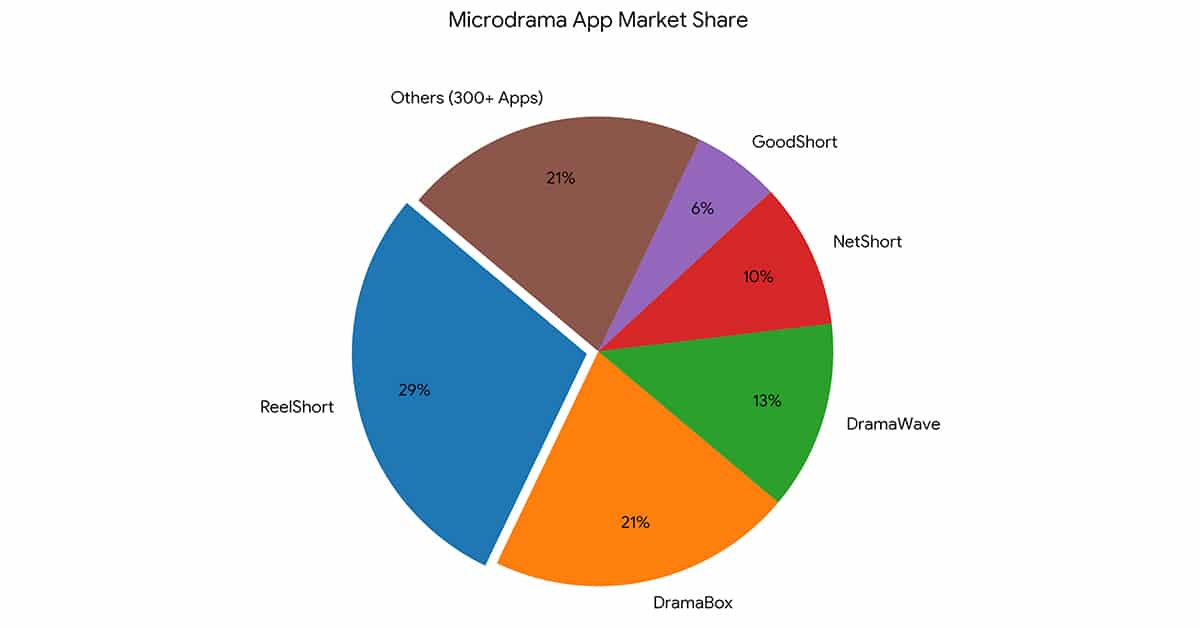
There is another part of the ReelShort story that is even more revealing. User acquisition has historically been its largest cost, and MPA expects marketing as a share of revenue to fall as franchises, owned distribution and other channels mature. That means the billion-dollar achievement is not proof that tiny soap operas are inherently wonderful businesses. It is evidence that once a company gets good enough at converting attention into transactions, the next problem becomes owning the attention rather than repeatedly buying it.
The cliffhanger gets the payment. Distribution gets the margin.
2. A roadmap can make a team less focused even when everyone is working on the same product
Researchers at UC Berkeley found something subtler than ordinary task switching. Participants repeatedly performed the same cognitive task, but researchers changed the objective between emphasizing speed and emphasizing accuracy. Performance deteriorated when people had to switch goals, particularly when they had little time to adjust. The work itself did not change. The definition of success did.
This is almost a description of startup planning.
A team can be working on one product while effectively changing jobs every few weeks. January is about activation. February is enterprise. March becomes retention because churn looks uncomfortable. Then an investor asks about AI and suddenly the roadmap acquires an agent.
Each objective can be reasonable independently. The mistake is assuming reasonable objectives add together into a reasonable strategy.
They often subtract from one another.
Suppose a product team is told to maximize activation. It might remove steps, simplify configuration and push users toward the fastest possible first success. Tell the same team to maximize enterprise readiness and the sensible choices reverse. Now permissions, administration, security and configurability matter. Neither approach is wrong. But a product cannot simultaneously become radically simpler and radically more configurable without someone deciding where the tradeoff should land.
A roadmap full of priorities is therefore not merely a scheduling problem. It can be evidence that nobody made the harder decision about which form of good matters most right now.
This is one reason small companies sometimes beat much larger ones despite having fewer engineers. Having ten times the people does not create ten times the progress if those people are moving toward different definitions of success. Coordination cost is not just meetings and Slack messages. It is the cost of maintaining a shared answer to the question, “What are we trying to make better?”
The useful unit of focus may not be the task. It may be the objective.
A team can work on twenty tasks and remain focused if they all push the same number in the same direction. It can also work on three tasks and be scattered if each exists for a different strategic reason.
The best roadmaps probably contain fewer verbs than most companies think. Grow this. Fix this. Prove this. One definition of better, held long enough for the organization to learn how to achieve it.
3. Spotify is trying to turn permission into a product
Spotify and Universal Music Group agreed in May to create a paid tool that will let users make AI-generated covers and remixes using music from participating artists and songwriters. The companies describe the model with three words: consent, credit and compensation. Participating rights holders choose whether to take part, and the resulting creations generate additional compensation on top of normal Spotify royalties.
Then this week Spotify expanded the initiative through a deal with Merlin, whose network represents tens of thousands of independent labels. The product has not launched yet, but the strategic move is already interesting.
The music industry’s first instinct toward generative AI was understandably defensive. If someone trains a system on your work and starts generating substitutes for it, litigation is a rational response. But lawsuits and products solve different problems. A lawsuit tells people what they cannot do. A product asks whether some version of what they want to do can be made legitimate and monetizable.
Spotify is betting that fans do not only want access to finished music. Some want permission to play with it.
That is an important change in what ownership means online. Historically, a valuable catalog was valuable partly because other people were excluded from modifying it. Generative AI makes modification inevitable enough that permission itself can become scarce. If millions of people can technically create a version of a song, then the official version of that capability, where the artist approves, gets credited and gets paid, becomes a product.
There is a larger pattern here for any company sitting on valuable intellectual property. AI lowers the cost of transforming existing assets. A publisher’s archive can become a research corpus. A game universe can become a creation environment. A design library can become a generator. Educational material can become a tutor. The instinctive response is often to protect the asset from transformation because transformation used to imply loss of control.
But there are two forms of control. One is preventing people from doing something. The other is building the place where they prefer to do it.
The second can be much more valuable.
This does not mean every rights holder should open everything. Some transformations damage the original asset, confuse provenance or destroy the economics that produced it. The interesting question is narrower: what are users already trying to do with your intellectual property that you currently classify only as misuse?
If the behavior has genuine demand, the unauthorized version may be a product specification in disguise.
4. Forgotten subscriptions were a business model. They are becoming a liability.
A lot of subscription businesses contain two kinds of customers. The first actively chooses the product every month. The second chose it once and then stopped choosing.
For years, the distinction barely mattered because both credit cards kept working.
Current subscription research collected by SubStop puts average American subscription spending around $219 per month and says 42% of consumers pay for subscriptions they have forgotten about. The exact consumer estimates vary substantially between surveys, which is why I would not over-index on one headline number. The durable fact is that recurring billing has historically benefited from inattention.
That is an unusual kind of moat because the customer becomes more valuable when they think about you less.
It is also unlikely to last.
Banks already identify recurring charges. Subscription-management apps collect them in one place. The obvious next step is an AI agent that looks at twelve months of transactions and asks a much less sentimental question: “You paid $240 for this product and used it twice. Should I cancel it?”
The customer no longer needs enough motivation to remember the service, find the account, recover the password, navigate to billing and click through a retention maze. They can delegate the audit.
This changes the economics of subscription products in a useful way. Companies will have to earn renewal closer to the way they earned the original purchase.
The products best prepared for this are the ones that can produce a value receipt. Not marketing claims about what the product could do, but evidence of what happened because the customer had it: 42 hours saved, nine invoices collected, 1,300 attacks blocked, $680 earned, 17 meetings summarized, 12 workouts completed.
Usage itself is not enough. Nobody wants an email saying they opened an app 19 times. The receipt has to translate usage into the reason the customer originally bought the product.
That creates an interesting product-design question: if an impartial agent reviewed your customer’s bank statement tomorrow and asked your software to justify its own charge, what evidence could it provide?
“We hope they forgot” used to be sufficient for a surprising amount of recurring revenue.
It will become a dangerous assumption once forgetting can be automated away.
5. General Catalyst is treating customers like factories
Function Health recently received $450 million through General Catalyst’s Customer Value Fund, only eight months after raising a $298 million Series B. Function sells a membership built around extensive lab testing and preventive-health services, and the new financing is designed to support further growth.
The interesting part is not the size. It is what General Catalyst thinks it is financing.
Traditional venture capital treats customer acquisition as one of the things a company does with equity. Raise $100 million, hire engineers, open offices, run ads, hire salespeople and hope the resulting company becomes worth much more than $100 million.
General Catalyst’s Customer Value Fund separates the customer-acquisition machine from the rest of the company. It can fund sales and marketing upfront and receive repayment only from the customer cohorts created by that spending, up to a capped return. If those customers underperform, the fund bears that downside rather than having a conventional claim on the entire company.
The idea sounds exotic until you compare it with almost every physical industry.
A manufacturer does not necessarily issue shares every time it wants another machine. An airline does not sell part of the company every time it adds an aircraft. Productive assets with sufficiently predictable cash flows can be financed separately because lenders know roughly what the asset will produce.
Technology companies have historically claimed to be “asset light,” but many of them spend enormous sums creating another kind of asset: customers.
If spending $100 reliably produces a customer who returns $180 of gross profit over a measurable period, then the acquisition process begins to resemble a machine. Put money in, receive a stream of cash out. General Catalyst has explicitly argued that CAC should be thought about more like capital expenditure once the underlying unit economics are predictable enough.
This reframes what maturity means for a startup.
Early on, almost everything is uncertain. You do not know whether the product works, whether anyone wants it, how much they will pay, how long they will stay or what it costs to acquire them. Equity is appropriate because equity absorbs uncertainty.
But eventually some parts of the company stop being uncertain. If the tenth million dollars of customer acquisition behaves a lot like the ninth million, financing it with the same expensive capital used to fund experimental R&D starts to look strange.
Equity should pay for uncertainty. Cheaper capital should increasingly pay for things you already understand.
That distinction could matter much more as companies become easier to start. AI is reducing the capital required to build products, but distribution can still be expensive. If customer acquisition itself becomes financeable, founders may eventually need less equity not only to create the product, but also to scale it.
The most valuable thing in that world is not merely good CAC or good LTV. It is predictability.
A business becomes easier to finance when its customers stop looking like a story and start looking like an asset.
If you haven’t yet, subscribe, like, leave a comment, and share Token Economy. It helps us keep digging past the headlines and bringing you the most interesting ideas, shifts, and second-order effects across AI, technology, startups, and business each week.